
THE ETHICAL FOUNDATIONS OF SUNNI SUFISM IN MUHAMMAD AL-MAKKI AL-NASIRI’S THOUGHT (D. 1414 AH): A STUDY OF THEIR MAQĀṢID AL-SHARĪʿAH DIMENSIONS
DOI:
https://doi.org/10.70703/bze5j249Keywords:
Sunni Sufism, Spiritual Purification, Ethical Objectives, Behavioral ReformAbstract
This research aims to elucidate the ethical and teleological structure within the reformist project of Al-Allāma Muḥammad al-Makkī al-Nāṣirī, exploring the foundations of Sunni Sufism in his thought as an antidote to behavioral ailments and spiritual stagnation. The study addresses a central problematic: how al-Nāṣirī formulated a purificatory system that integrates inner purity with active civilizational engagement, transcending stereotypical forms of heterodox Sufism that contradict the rulings of Islamic Sharia. Utilizing an inductive-analytical methodology, the research deconstructs concepts such as spiritual realization, faith-based verification, the Great Trust (Amānah), and the cultivation of the earth (Imārat al-Arḍ) within al-Nāṣirī’s exegetical and reformist corpus. The findings reveal that ethics, for al-Nāṣirī, serve as a Maqāsidic compass guiding the individual from the constraints of egoism to the breadth of social responsibility; where individual purification is organically linked to societal reform and the actualization of peace and justice. Ultimately, the research offers a reconstructive reading of Sunni Sufism as a driving force for the comprehensive moralization of public life, and as a safeguard for restoring the lost equilibrium between spiritual aspirations in the journey toward God and the requirements of contemporary reality in relation to others and the surrounding environment.
Downloads
References
al-Aṣbahānī, Abū Nuʿaym, Ḥilyat al-Awliyāʾ wa-Ṭabaqāt al-Aṣfiyāʾ (Miṣr: Maṭbaʿat al-Saʿādah, 1394 AH).
al-Bayhaqī, Abū Bakr, Shuʿab al-Īmān, ed. Abū Hājir Zaghlūl, 1st ed. (Bayrūt: Dār al-Kutub al-ʿIlmiyyah, 1421 AH).
al-Ghazālī, Abū Ḥāmid, Iḥyāʾ ʿUlūm al-Dīn (Bayrūt: Dār al-Maʿrifah, n.d.).
al-Ghazālī, Abū Ḥāmid, Maʿārij al-Quds fī Madārij Maʿrifat al-Nafs, 2nd ed. (Bayrūt: Dār al-Āfāq al-Jadīdah, 1975).
al-Jīlānī, ʿAbd al-Qādir, al-Ghunyah li-Ṭālibī Ṭarīq al-Ḥaqq, ed. Abū ʿAbd al-Raḥmān Ṣalāḥ ibn Muḥammad ibn ʿUwayḍah, 2nd ed. (Bayrūt: Dār al-Kutub al-ʿIlmiyyah, 1417 AH).
al-Nāṣirī, Muḥammad al-Makkī, al-Aḥbās al-Islāmiyyah fī al-Mamlakah al-Maghribiyyah (al-Maghrib: Wizārat al-Awqāf wa-al-Shuʾūn al-Islāmiyyah, 1992).
al-Nāṣirī, Muḥammad al-Makkī, al-Taysīr fī Aḥādīth al-Tafsīr, 1st ed. (Bayrūt: Dār al-Gharb al-Islāmī, 1985).
al-Nāṣirī, Muḥammad al-Makkī, Iẓhār al-Ḥaqīqah wa-ʿIlāj al-Khalīqah (al-Maghrib: Manshūrāt al-Sabīl, 2010).
al-Qurṭubī, Abū ʿAbd Allāh, al-Jāmiʿ li-Aḥkām al-Qurʾān, ed. Aḥmad al-Bardūnī and Ibrāhīm Aṭfaysh, 2nd ed. (al-Qāhirah: Dār al-Kutub al-Miṣriyyah, 1384 AH).
al-Qushayrī, ʿAbd al-Karīm, al-Risālah al-Qushayriyyah, ed. ʿAbd al-Ḥalīm Maḥmūd and Maḥmūd ibn al-Sharīf (al-Qāhirah: Dār al-Maʿārif, n.d.).
al-Shāṭibī, Abū Isḥāq, al-Iʿtiṣām, ed. Sālim ibn ʿĪd al-Hilālī, 1st ed. (al-Saʿūdiyyah: Dār Ibn ʿAffān, 1412 AH).
al-Shāṭibī, Abū Isḥāq, al-Muwāfaqāt, ed. Abū ʿUbaydah Mashhūr ibn Ḥasan Āl Salmān, 1st ed. (al-Qāhirah: Dār Ibn ʿAffān, 1417 AH).
al-Sulamī, Abū ʿAbd al-Raḥmān, Ṭabaqāt al-Ṣūfiyyah, ed. Muṣṭafā ʿAbd al-Qādir ʿAṭā, 1st ed. (Bayrūt: Dār al-Kutub al-ʿIlmiyyah, 1419 AH).
Ibn al-Qayyim, Shams al-Dīn, Madārij al-Sālikīn bayna Manāzil Iyyāka Naʿbudu wa-Iyyāka Nastaʿīn, ed. Muḥammad al-Muʿtaṣim bi-Allāh al-Baghdādī, 3rd ed. (Bayrūt: Dār al-Kitāb al-ʿArabī, 1416 AH).
Ibn al-Qayyim, Shams al-Dīn, ʿUddat al-Ṣābirīn wa-Dhakhīrat al-Shākirīn, 3rd ed. (Bayrūt: Dār Ibn Kathīr, 1409 AH).
Ibn Kathīr, Abū al-Fidāʾ Ismāʿīl, Tafsīr al-Qurʾān al-ʿAẓīm, 1st ed. (Bayrūt: Dār al-Kutub al-ʿIlmiyyah, 1419 AH).
Ibn Khaldūn, ʿAbd al-Raḥmān, al-Muqaddimah (Bayrūt: Dār al-Fikr, 1401 AH).
Muḥammad Rashīd Riḍā, Tafsīr al-Manār (Miṣr: al-Hayʾah al-Miṣriyyah al-ʿĀmmah lil-Kitāb, 1990).
Muḥammad Zakī Ibrāhīm, al-Ifhām wa-al-Ifḥām aw Qaḍāyā al-Wasīlah wa-al-Qubūr (al-Qāhirah: Muʾassasat Iḥyāʾ al-Turāth al-Ṣūfī, 2004).
Muḥammad Zakī Ibrāhīm, al-Mashrūʿ wa-al-Mamnūʿ (al-Qāhirah: Dār Iḥyāʾ al-Turāth al-Ṣūfī, n.d.).
Muḥammad Zakī Ibrāhīm, al-Mukhtār min Kitāb al-Marjiʿ: Maʿālim al-Mashrūʿ wa-al-Mamnūʿ min Mumārasāt al-Taṣawwuf al-Muʿāṣir, 5th ed. (al-Qāhirah: Muʾassasat Iḥyāʾ al-Turāth al-Ṣūfī, 2005).
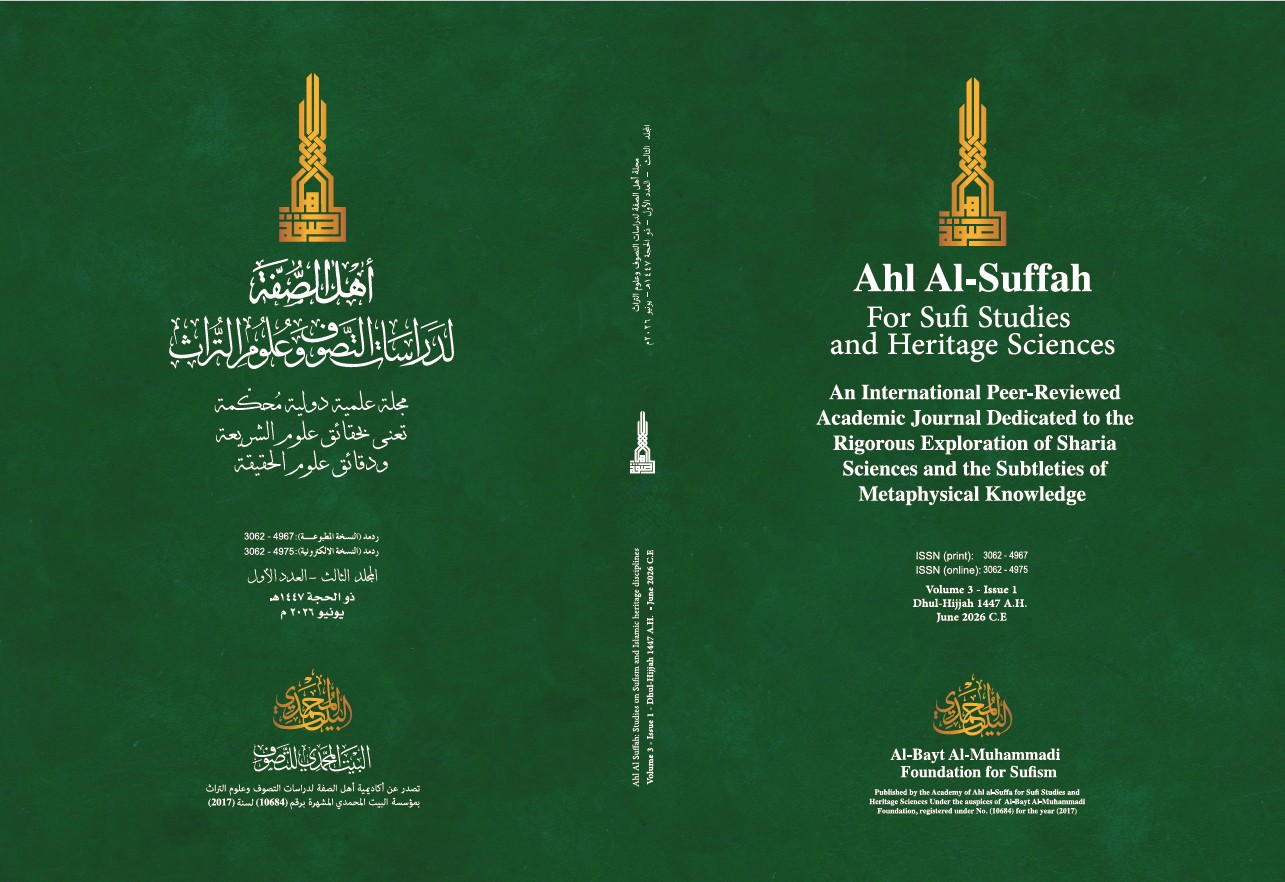
Downloads
Published
Issue
Section
License
Copyright (c) 2026 Ahl alSuffa for Sufi Studies and Heritage Sciences

This work is licensed under a Creative Commons Attribution 4.0 International License.